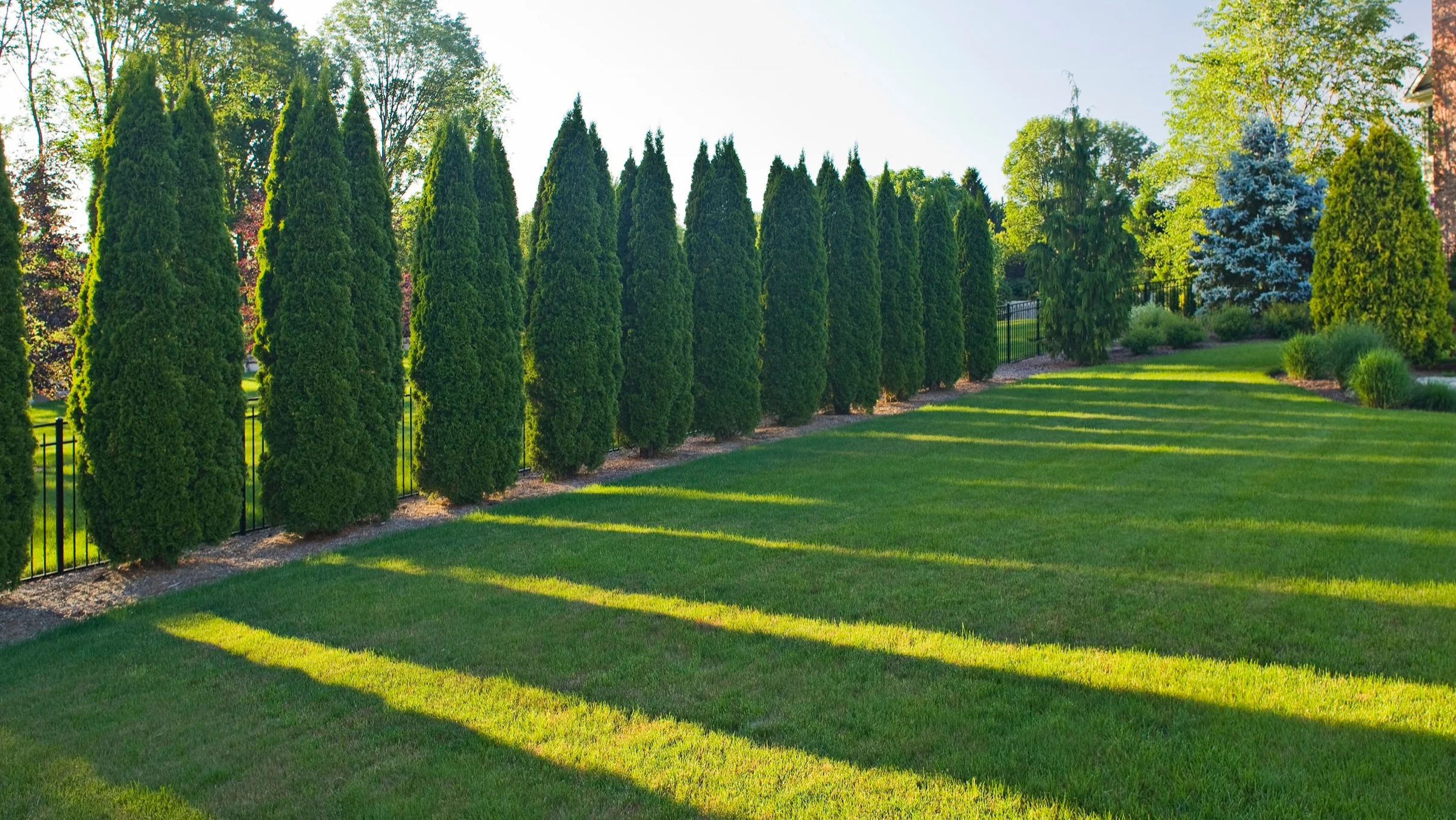

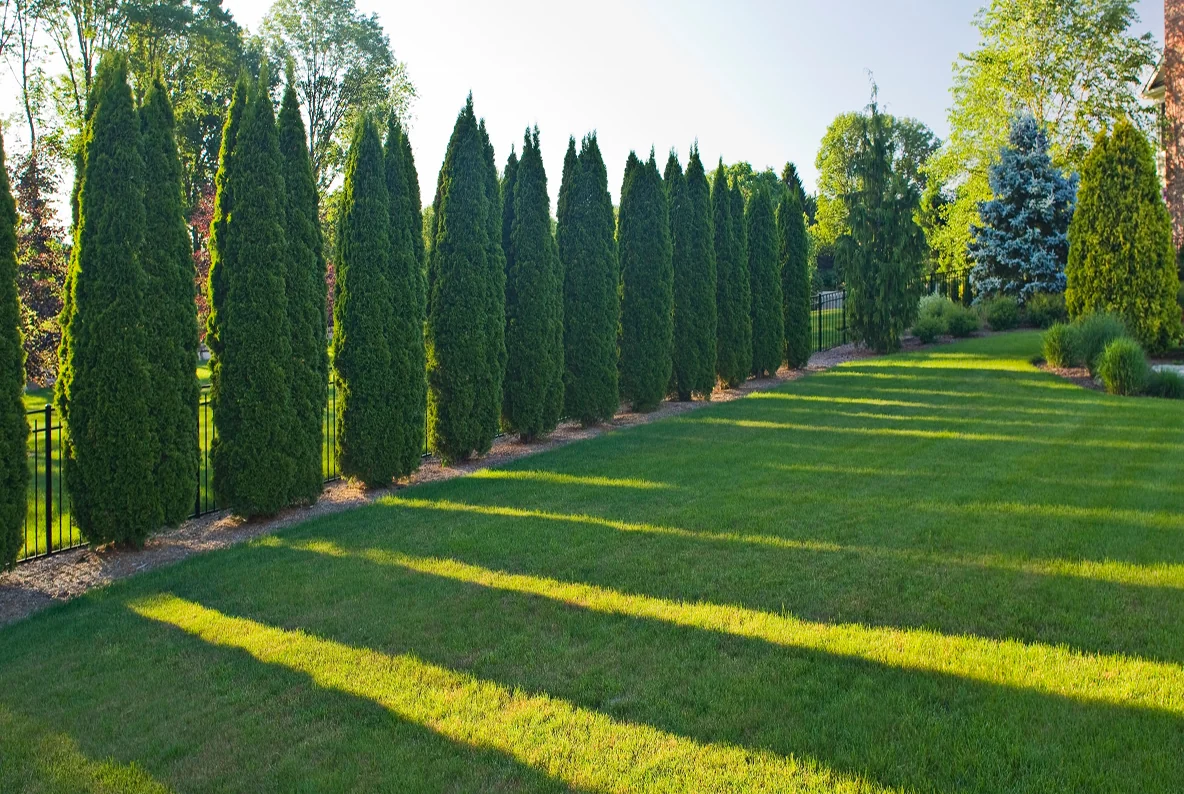
thuja landscape designs
At New Green Space, we believe that every outdoor area has the potential to become a breathtaking masterpiece. As passionate landscape designers, we’ve dedicated ourselves to transforming ordinary spaces into extraordinary havens of natural beauty and tranquility. Founded in 2004, New Green Space emerged from a shared vision of our founders
— to bridge the gap between urban living and nature’s splendor. What started as a small team of enthusiastic gardeners has now blossomed into a full-fledged landscape design company, serving clients across United states.
Watering
Once you transplant a Thuja to the garden, proper watering should be your primary concern. Getting the water down to the root system of every one of these plants is essential, as they will dry out otherwise. The amount of water a plant will need depends on its age and size. We sell these trees as mature plants with fairly large root balls, so you should be watering every other day for at least a few minutes on each root ball.
Feeding
After your Thuja root balls have been thoroughly soaked, you should also use liquid fertiliser to encourage new growth. We use Miracle — Gro Liquafeed fertiliser on our own plants — ideally the one that attaches to a hose. You can easily find this fertiliser on Amazon or at DIY stores such as Homebase.
This will ensure your new Thujas do not dry out or get yellowing or browning of the foliage — which is a common symptom of insufficient watering.
- Ensuring good drainage
- Adding Organic Fertilizers
- Adjustment of soil pH (optimally 6.0 — 8.0)
- 1 Choosing the right type of thuja:
-
- Thuja occidentalis
- Thuja plicata
- Thuja orientalis
- 2 Consideration of climatic conditions:
-
- Frost resistance zone
- Precipitation
- Sunlight intensity
- 3 Combination with other plants:
-
- Selection of plants that are contrasting in color and shape
- Use of ground cover plants
- Creating multi — tiered compositions
- 4 Land preparation:
-
- Ensuring good drainage
- Adding Organic Fertilizers
- Adjustment of soil pH (optimally 6.0 — 8.0)
- 5 Correct fit:
-
- Maintaining distance between plants
- Planting to the correct depth
- Mulching the tree trunk circle
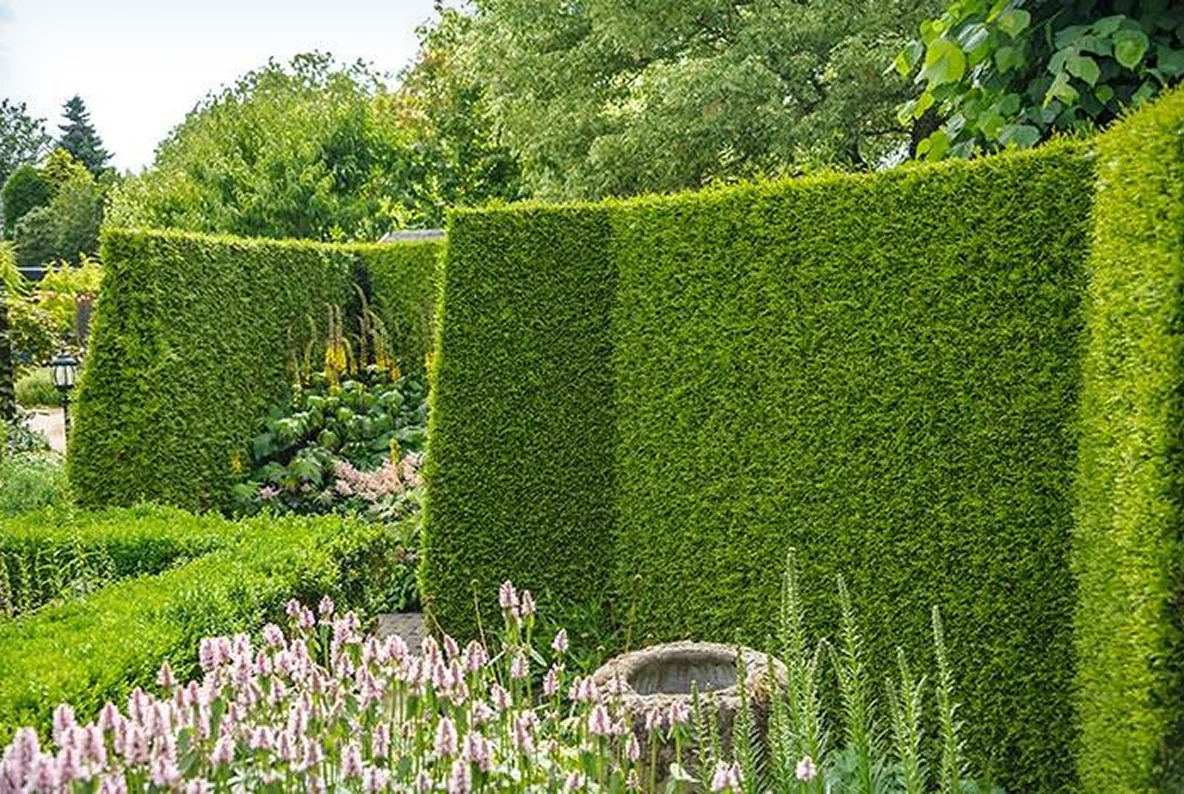
- 6 Shaping and trimming:
-
- Regular haircut to maintain shape
- Removing dry and damaged branches
- Formation of geometric shapes
- 7 Plant care:
-
- Regular watering, especially during dry periods
- Feeding with fertilizers in spring and autumn
- Protection from pests and diseases
- 8 Winter protection:
-
- Shelter for young plants
- Snowbreaker protection
- Preventing sunburn